

Introduction: Unveiling the Secrets of Building Muscle with the WellHealth Method
Building muscle is a common goal for many people who embark on their fitness journey. Whether you’re aiming for a more toned body, increased strength, or better athletic performance, muscle building is crucial. However, the road to muscle growth can sometimes feel overwhelming due to the numerous methods and advice available. The key is understanding how to build muscle the right way with WellHealth.
The “wellhealth how to build muscle tag” focuses on practical steps, nutrition, exercise, and recovery that work together to optimize muscle growth. Whether you’re just starting or looking to break through a plateau, this guide will give you detailed insights into WellHealth’s approach and help you achieve your goals.
In this bilingual article, we will explain everything from nutrition to exercise routines in both Hindi and English for a clearer understanding. So, let’s dive deep into the wellhealth how to build muscle tag!
WellHealth: How to Build Muscle Tag – Detailed Process
Step 1: Nutrition – The Foundation of Muscle Growth
Building muscle isn’t just about lifting weights; your diet plays an essential role in the process. To build muscle, you need to consume enough calories and specific macronutrients that support muscle repair and growth.
Key Nutritional Components for Muscle Building:
- Protein: Proteins are the building blocks of muscle. They help repair and grow muscle fibers that break down during workouts.
- Carbohydrates: Carbs provide the energy needed for intense workouts. Without carbs, your body lacks the energy required to perform at its best during strength training.
- Fats: Healthy fats support various bodily functions, including hormone production, which is critical for muscle growth.
Example:(wellhealth how to build muscle tag)
If you weigh 70 kg, you need at least 140 grams of protein daily (2 grams per kg of body weight). Similarly, aim for around 280 grams of carbs and 56 grams of healthy fats each day for balanced nutrition.

Step 2: Exercise Routines for Building Muscle – The Power of Strength Training
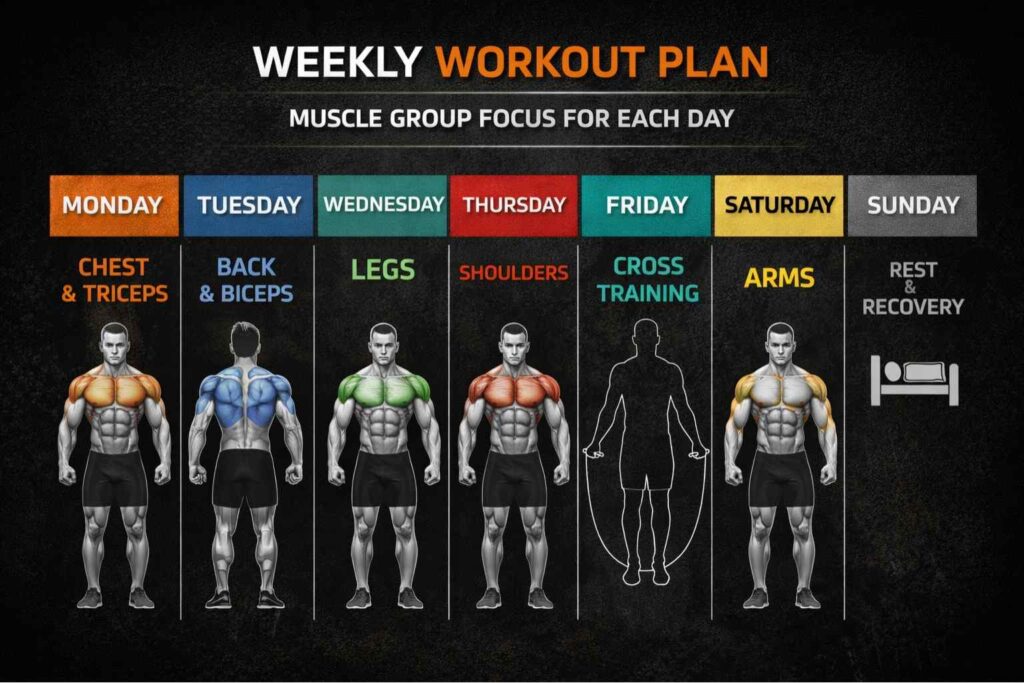
Strength training is at the core of building muscle, as it challenges your muscles to grow. The wellhealth how to build muscle tag emphasizes compound exercises, which work multiple muscle groups simultaneously. These exercises ensure balanced muscle growth and better overall strength.
Top Strength Training Exercises for Building Muscle:
- Squats: The king of leg exercises, squats target the thighs, hips, and buttocks.
- Deadlifts: A powerful movement for building strength in the lower back, glutes, and hamstrings.
- Bench Press: A classic upper body exercise that targets the chest, shoulders, and triceps.
- Pull-Ups: A great exercise for building back and arm strength.
- Overhead Press: Strengthens shoulders and triceps, essential for upper body development.
Example Workout Routine for Beginners:
- Squats: 3 sets of 10 repetitions
- Deadlifts: 3 sets of 8 repetitions
- Pull-ups: 3 sets of 6 repetitions
- Bench Press: 3 sets of 8 repetitions
Step 3: Progressive Overload – Key to Continuous Muscle Growth
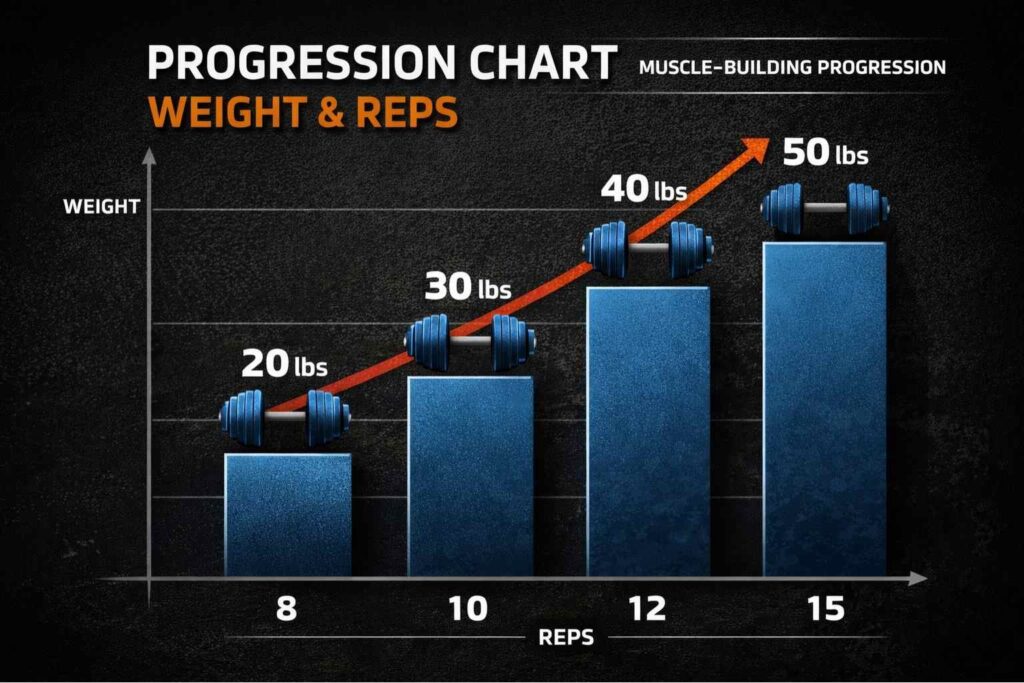
Progressive overload is essential for muscle growth. This principle involves gradually increasing the intensity of your workouts by increasing weight, repetitions, or workout volume. The goal is to push your muscles beyond their current capacity, forcing them to adapt and grow stronger.
How to Implement Progressive Overload:
- Increase Weight: Start with a manageable weight and gradually increase it every 1-2 weeks.
- Increase Reps: If you’re comfortable with a certain weight, increase the number of reps.
- Increase Sets: Add another set to increase overall workout volume.
Step 4: Rest and Recovery – The Secret to Building Muscle Faster
Many people make the mistake of thinking that more workouts lead to more muscle growth. In reality, muscle growth happens during recovery. When you work out, you create small tears in muscle fibers. It’s during rest that your body repairs and grows those fibers, making them stronger.
How to Improve Recovery:(wellhealth how to build muscle tag)
- Sleep: Aim for 7-8 hours of sleep each night. Sleep is critical for muscle recovery.
- Active Recovery: Include low-intensity activities like walking or yoga on rest days.
- Stretching: Incorporating dynamic and static stretching can help in muscle recovery and prevent injuries.
WellHealth How to Build Muscle Tag – Comparison with Other Methods
To understand the effectiveness of wellhealth how to build muscle tag, let’s compare it with other common methods.
| Method | WellHealth Approach | Other Methods |
|---|---|---|
| Focus on Compound Movements | Prioritize multi-joint exercises | Focus only on isolation exercises |
| Nutrition Strategy | Balanced diet with protein, carbs, and fats | High-protein or low-carb diet |
| Rest and Recovery | Emphasis on proper recovery and sleep | Minimal rest and recovery time |
How to Follow the WellHealth How to Build Muscle Tag?
Following WellHealth’s muscle-building method is simple if you break it down into digestible steps. Here’s how to follow it:
- Create a Structured Workout Plan: Focus on compound movements (squats, bench press, deadlifts) and progressively overload your muscles.
- Plan Your Nutrition: Consume a balanced diet with sufficient protein, carbs, and healthy fats.
- Prioritize Recovery: Ensure you get adequate sleep and rest, giving your muscles time to repair and grow.
| Step | Description |
|---|---|
| 1. Create a Structured Workout Plan | Incorporate compound exercises for strength and muscle growth. |
| 2. Focus on Nutrition (Balanced Diet) | Consume a diet rich in proteins, carbs, and healthy fats for muscle repair and energy. |
| 3. Implement Progressive Overload | Gradually increase weight, reps, or sets to challenge your muscles. |
| 4. Prioritize Recovery (Rest Days & Sleep) | Ensure adequate rest and sleep (7-9 hours) for muscle recovery. |
| 5. Track Progress and Adjust Goals | Monitor your performance, nutrition, and adjust the plan as needed for continuous improvement. |
Macro Guide: WellHealth How to Build Muscle Tag
Here’s a quick guide to your macronutrient intake when following WellHealth’s muscle-building method:
| Macro | Ideal Intake for Muscle Building | Example Foods |
|---|---|---|
| Protein | 1.6 – 2.2 grams per kg of body weight | Chicken, fish, eggs, lentils |
| Carbs | 3 – 5 grams per kg of body weight | Brown rice, sweet potatoes, oats |
| Fats | 0.8 – 1.0 grams per kg of body weight | Avocados, olive oil, nuts |
Quick Swap List for Better Results
If you’re looking for variety in your routine, here are some quick swaps for wellhealth how to build muscle tag:
- Squats → Leg Press Machine
- Deadlifts → Romanian Deadlifts
- Bicep Curls → Hammer Curls
These simple swaps will ensure that your muscles are consistently challenged.
Benefits of the WellHealth How to Build Muscle Tag
The wellhealth how to build muscle tag has several benefits, including:
- Improved Strength: By focusing on compound exercises and progressive overload, you will notice a significant improvement in strength.
- Better Physique: Building muscle will give you a more defined, toned body.
- Health Benefits: Muscle building also enhances metabolism, bone density, and overall physical health.
Types of Exercises in the WellHealth How to Build Muscle Tag
When it comes to building muscle, the type of exercises you perform plays a crucial role in determining how effectively you can stimulate muscle growth. The WellHealth How to Build Muscle Tag focuses on incorporating various types of exercises that are specifically designed to target different muscle groups, boost overall strength, and enhance endurance.
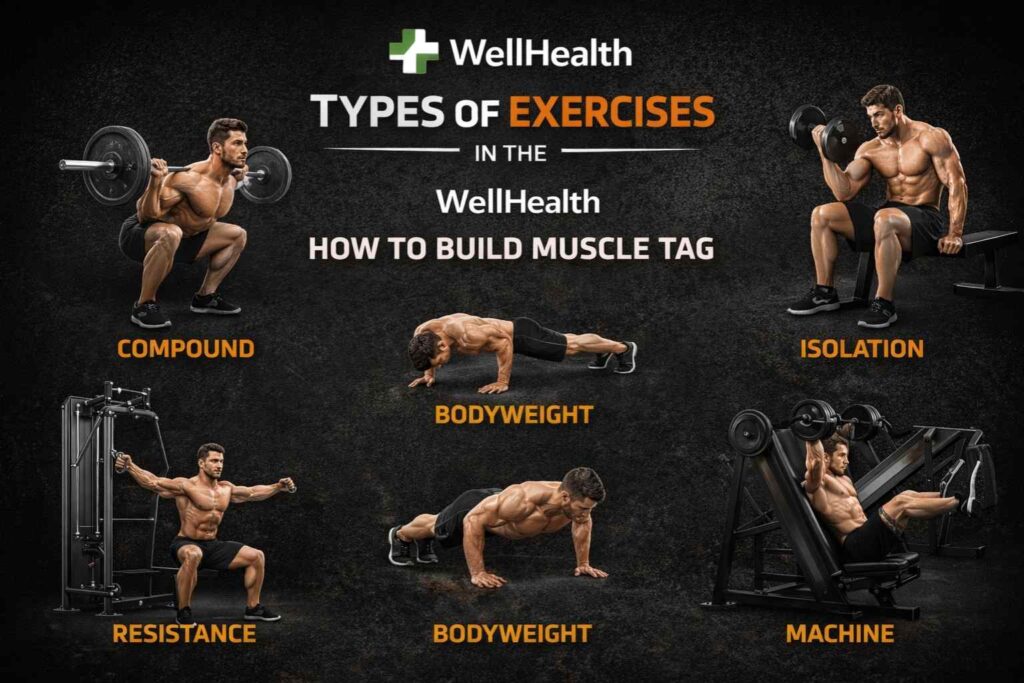
Here’s a breakdown of the types of exercises that should be part of your muscle-building routine for wellhealth how to build muscle tag:
| Exercise Type | Purpose | Examples |
|---|---|---|
| Compound Exercises | Engage multiple muscle groups for efficient growth | Squats, deadlifts, bench press |
| Isolation Exercises | Target specific muscles for detailed toning | Bicep curls, leg extensions |
| Cardio | Supports heart health and fat loss | Running, cycling, swimming |
1. Compound Exercises (Multi-Joint Exercises)
What Are They?
Compound exercises engage multiple muscle groups and joints simultaneously, making them incredibly efficient for building muscle and strength. These exercises activate larger muscle groups and allow you to lift heavier weights, leading to more muscle fibers being recruited.
Examples:(wellhealth how to build muscle tag)
- Squats – Engage the quads, hamstrings, glutes, and core.
- Deadlifts – Work the lower back, glutes, hamstrings, and core.
- Bench Press – Targets the chest, shoulders, and triceps.
- Pull-Ups/Chin-Ups – Work the back, biceps, and shoulders.
- Overhead Press – Targets the shoulders, upper chest, and triceps.
Why Important for Muscle Building:
Compound exercises are highly effective for overall muscle development because they increase overall strength and power. They also promote the release of muscle-building hormones like testosterone and growth hormone.
2. Isolation Exercises (Single-Joint Exercises)
What Are They?
Isolation exercises focus on a single muscle group and involve one joint. These exercises are perfect for targeting specific muscles that might not get as much attention during compound lifts. They’re also great for improving muscle imbalances and enhancing muscle definition.
Examples:(wellhealth how to build muscle tag)
- Bicep Curls – Target the biceps.
- Tricep Dips – Focus on the triceps.
- Leg Extensions – Isolate the quads.
- Leg Curls – Target the hamstrings.
- Lateral Raises – Work the deltoids (shoulders).
Why Important for Muscle Building:
While compound exercises lay the foundation, isolation exercises help in shaping and defining specific muscles. wellhealth how to build muscle tag, They’re excellent for improving muscle symmetry and enhancing detail in smaller muscle groups.
3. Bodyweight Exercises
What Are They?
Bodyweight exercises use your own body weight for resistance, making them a great option for building muscle without the need for gym equipment. Wellhealth how to build muscle tag, These exercises can be performed anywhere and are perfect for beginners or those who prefer home workouts.
Examples:(wellhealth how to build muscle tag)
- Push-Ups – Target the chest, shoulders, and triceps.
- Squats – Engage the quads, glutes, and hamstrings.
- Lunges – Work the lower body, including quads, glutes, and hamstrings.
- Planks – Strengthen the core and stabilize the lower back.
- Pull-Ups (if possible) – Target the back, biceps, and shoulders.
Why Important for Muscle Building:
Bodyweight exercises are functional and can help build foundational strength. They’re also perfect for increasing muscle endurance and improving flexibility. Over time, bodyweight exercises can be progressed by increasing reps or adding variations, making them a great way to build strength without equipment.
4. Free Weights (Dumbbells and Barbells)
What Are They?
Free weights are weights that are not attached to a machine, such as dumbbells, barbells, kettlebells, and weight plates. Using free weights requires more stability and coordination, engaging additional muscles for balance and control. These exercises provide a full range of motion and are highly effective for building muscle.
Examples:(wellhealth how to build muscle tag)
- Dumbbell Rows – Work the back and biceps.
- Barbell Squats – Target the quads, hamstrings, and glutes.
- Dumbbell Bench Press – Engage the chest, triceps, and shoulders.
- Barbell Deadlifts – Strengthen the lower back, glutes, hamstrings, and core.
- Kettlebell Swings – Focus on the glutes, hamstrings, and lower back.
Why Important for Muscle Building:
Free weights allow for a larger range of motion and the ability to add more weight as you progress. They also engage stabilizing muscles, leading to better muscle growth and improved overall strength.
5. Machines and Resistance Bands
What Are They?
Machines and resistance bands provide targeted muscle training with controlled movement patterns. While they may not activate as many stabilizing muscles as free weights, they are still effective for building muscle, especially for beginners or those looking to isolate specific muscles.
Examples:(wellhealth how to build muscle tag)
- Leg Press Machine – Focuses on the quads, hamstrings, and glutes.
- Chest Press Machine – Targets the chest, shoulders, and triceps.
- Lat Pulldown Machine – Works the back and biceps.
- Bicep Curl Machine – Isolates the biceps.
- Resistance Band Squats – Helps in building leg strength and glute development.
Why Important for Muscle Building:(wellhealth how to build muscle tag)
Machines provide a safer alternative for beginners or those recovering from injury, allowing you to lift heavier weights with controlled motion. Resistance bands, on the other hand, offer great versatility and progressive resistance that builds muscle in a different way.
6. Functional Exercises
What Are They?
Functional exercises are designed to improve movements that you perform in your daily life. These exercises are dynamic and focus on improving strength, stability, and mobility across multiple joints and muscles.
Examples:(wellhealth how to build muscle tag)
- Kettlebell Swings – Help with power generation and hip mobility.
- Medicine Ball Slams – Engage the entire body for explosive power.
- Farmers Walk – Strengthens the grip, forearms, and core.
- Turkish Get-Ups – Build total-body stability and strength.
- Bear Crawls – Engage the core, shoulders, and legs.
Why Important for Muscle Building:
For wellhealth how to build muscle tag, Functional exercises improve your overall body mechanics, strength, and endurance, ensuring that muscle growth translates into improved daily performance. These exercises also help in building coordination and muscle stability.
7. Plyometric (Explosive) Exercises
What Are They?
Plyometric exercises involve explosive movements that increase power, speed, and muscle strength. They are fast, high-intensity movements designed to increase muscle activation quickly, improving both strength and agility.
Examples:(wellhealth how to build muscle tag)
- Jump Squats – Focus on the legs and glutes.
- Clapping Push-Ups – Work the chest, shoulders, and triceps.
- Box Jumps – Target the quads, hamstrings, and glutes.
- Burpees – Engage the entire body, focusing on the chest, legs, and core.
- Lateral Bounds – Strengthen the legs and improve agility.
Why Important for Muscle Building:
Plyometric exercises recruit fast-twitch muscle fibers, which are essential for building muscle mass and power. They are excellent for enhancing athletic performance while simultaneously boosting muscle growth and endurance.
How to Start Building Muscle: Guide for Beginners
If you are just starting out, here’s a step-by-step guide to get you started:
- Begin with Basic Movements: Start with bodyweight exercises like push-ups and squats.
- Focus on Form: Make sure you are performing exercises with proper form to avoid injuries.
- Create a Routine: Aim for 3-4 days a week of strength training, with at least one rest day in between.
- Track Your Progress: Keep track of your lifts, nutrition, and muscle progress.
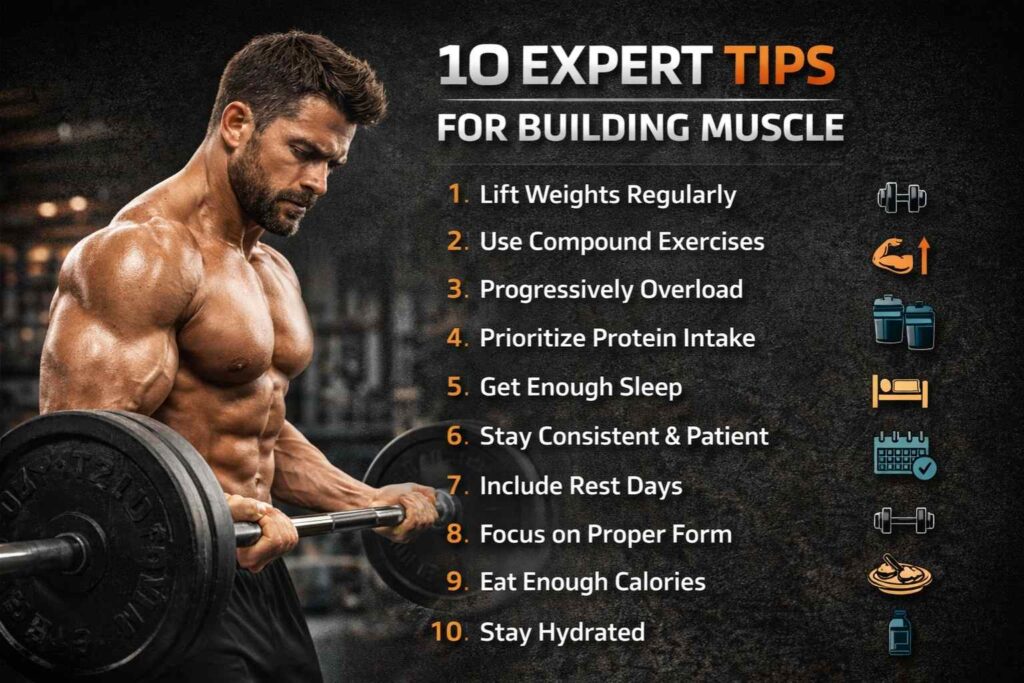
10 Expert Tips for Building Muscle
Building muscle requires a well-rounded approach. Here are 10 expert tips that will ensure you maximize your efforts and achieve the best results:
1. Prioritize Compound Movements
Why: Compound exercises, like squats, deadlifts, and bench presses, engage multiple muscle groups simultaneously, helping you build muscle faster and more efficiently. These movements also increase strength and muscle coordination.
Tip: For wellhealth how to build muscle tag, Focus on these exercises as the foundation of your workout routine. Perform them first when you have the most energy.
2. Gradually Increase the Weight (Progressive Overload)
Why: Progressive overload is the cornerstone of muscle growth. By gradually increasing the resistance, your muscles are forced to adapt, grow, and become stronger.
Tip: Add small increments (5-10% increase) to the weights every week or two, ensuring your muscles continuously face new challenges.
3. Maintain Proper Form and Technique
Why: Using improper form can lead to injury and limit your muscle-building progress. Correct form ensures that you are targeting the right muscle groups effectively.
Tip: For wellhealth how to build muscle tag, Consider working with a personal trainer for a session or two if you are unsure about your form. Use mirrors or record videos of yourself to check your technique.
4. Include Rest Days and Proper Recovery
Why: Muscles grow during recovery, not during the workout. Taking rest days allows your muscles to repair and rebuild, which is crucial for muscle growth.
Tip: Take at least 1-2 rest days per week. Don’t over-train, and avoid working the same muscle group on consecutive days.
5. Consume a High-Protein Diet
Why: Protein is essential for muscle repair and growth. Without sufficient protein, your body won’t have the necessary building blocks to build muscle mass.
Tip: Aim for 1.6 to 2.2 grams of protein per kilogram of body weight daily. Focus on lean meats, eggs, fish, beans, and legumes as your protein sources.
6. Don’t Skip Warm-Up and Cool-Down
Why: Warming up helps prepare your body for intense exercise and reduces the risk of injury, while cooling down aids muscle recovery.
Tip: Spend at least 5-10 minutes warming up before starting your workout (dynamic stretching, light cardio) and cooling down after (static stretching).
7. Track Your Progress Regularly
Why: Tracking progress allows you to identify what’s working and what needs adjustment. It helps keep you motivated and ensures you’re progressing toward your goals.
Tip: For wellhealth how to build muscle tag, Keep a fitness journal or use apps like MyFitnessPal or Strong to track weights, sets, and reps, as well as your daily nutrition.
8. Stay Hydrated
Why: Water plays a crucial role in muscle function, recovery, and overall health. Dehydration can lead to fatigue, muscle cramps, and decreased performance.
Tip: Drink at least 2-3 liters of water per day, and more if you’re training intensely. Consider drinking an electrolyte-infused beverage if you’re sweating heavily during workouts.
9. Implement Progressive Nutrition
Why: Just like your workouts, your diet needs to progress to match your muscle-building goals. You must eat enough to fuel muscle growth without gaining unnecessary fat.
Tip: Start by calculating your Total Daily Energy Expenditure (TDEE) and aim for a calorie surplus of 300-500 calories per day for optimal muscle gain.
10. Sleep and Recovery are Non-Negotiable
Why: For wellhealth how to build muscle tag , Sleep is when your body undergoes the most repair and muscle recovery. Aim for 7-9 hours of quality sleep each night to ensure muscle growth and repair.
Tip: Develop a consistent bedtime routine, avoid caffeine late in the day, and create a sleep-friendly environment by keeping your room dark and cool.
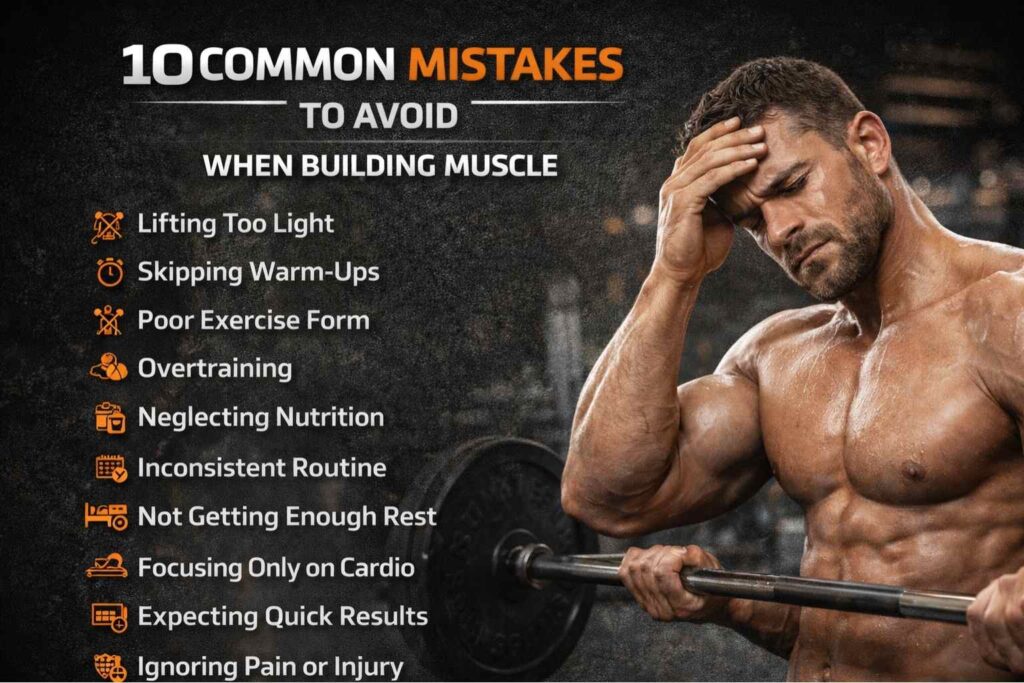
10 Common Mistakes to Avoid When Building Muscle
Even with the right approach, muscle building can be hindered by common mistakes. Here are the top 10 mistakes to avoid on wellhealth how to build muscle tag for your muscle-building journey:
1. Neglecting Nutrition
Why: Without proper nutrition, your muscles won’t have the nutrients needed to grow. Not eating enough or not eating the right foods will prevent muscle gain.
Mistake: Many people focus too much on exercise and neglect their diet, which is equally important.
Avoid: Ensure you’re eating enough calories, focusing on protein-rich foods, and consuming a balance of carbs and fats to fuel your workouts and recovery.
2. Not Getting Enough Protein
Why: Protein is crucial for muscle repair and growth. Without sufficient protein, your body can’t repair the microtears caused by strength training.
Mistake: Failing to hit your daily protein requirements or relying solely on carbs and fats for energy.
Avoid: Calculate your protein needs based on your body weight, and make sure you’re meeting your targets daily through whole foods or supplements.
3. Overtraining or Not Resting Enough
Why: Training too often without adequate recovery can lead to burnout, injuries, and stalled progress. Muscles need time to repair and grow.
Mistake: Some people train every day, thinking more is better, but neglecting rest periods.
Avoid: Schedule at least 1-2 rest days per week to let your body recover. Consider alternating muscle groups to avoid overworking any single area.
4. Focusing Too Much on Cardio
Why: While cardio is important for overall health, excessive cardio can interfere with muscle growth, especially if you are not eating enough to compensate.
Mistake: Spending too much time on cardio and not enough on strength training.
Avoid: Focus on strength training as your primary goal. If you do cardio, keep it moderate and balance it with muscle-building exercises.
5. Using Poor Form
Why: Poor form can lead to injuries, reducing your ability to progress. It also prevents you from targeting the muscles effectively.
Mistake: Lifting too heavy weights with improper form in an attempt to increase strength too quickly.
Avoid: Always use proper form and start with lighter weights to perfect your technique. Gradually increase weights once you’ve mastered the form.
6. Relying Too Much on Supplements
Why: While supplements can help in certain cases, they cannot replace a healthy diet and consistent workout routine.
Mistake: Expecting that supplements like protein powder or creatine will work wonders without the proper workout and nutrition.
Avoid: Focus on real, whole foods for muscle-building nutrition, and use supplements only as an addition to a balanced diet.
7. Not Tracking Progress
Why: Tracking your progress is key to ensuring that you’re moving forward. Without monitoring, it’s difficult to identify where improvements or adjustments are needed.
Mistake: Skipping the tracking process and assuming progress without concrete data.
Avoid: Use a fitness journal or apps to track your lifts, nutrition, and body measurements. Monitor your progress every 2-4 weeks.
8. Underestimating the Importance of Sleep
Why: Sleep is the body’s natural recovery process, essential for muscle repair. Without adequate sleep, your muscle growth will be hindered.
Mistake: Cutting back on sleep or not prioritizing it because of busy schedules or late-night workouts.
Avoid: Commit to 7-9 hours of quality sleep per night to allow your muscles the best chance to recover.
9. Expecting Quick Results
Why: Muscle growth is a gradual process that requires consistent effort over time. Many people become frustrated when they don’t see instant results.
Mistake: Focusing too much on short-term goals and not understanding that muscle growth takes time and patience.
Avoid: Set realistic, long-term goals and understand that muscle building is a marathon, not a sprint.
10. Ignoring Small Muscle Groups
Why: Many people focus solely on large muscle groups like the chest, legs, and back while neglecting smaller muscle groups like the shoulders, arms, and calves.
Mistake: Only working on the “big muscles” and ignoring the smaller muscles, which can lead to muscle imbalances and injuries.
Avoid: Incorporate exercises for all muscle groups in your routine to ensure balanced muscle growth and prevent injuries.
FAQs Section: 10 Common Google Questions about Building Muscle with WellHealth
Q1. How long does it take to build muscle?
Q2. How much protein do I need to build muscle?
Q3. Can I build muscle without lifting weights?
Q4. How can I speed up muscle growth?
Q5. Is cardio important for building muscle?
Q6. How many times a week should I train to build muscle?
Q7. What should I eat before and after a workout to build muscle?
Q8. Can I build muscle while losing fat?
Q9. Should I use supplements for muscle building?
Q10. How can I avoid muscle soreness after a workout?
Conclusion: Stay Committed to Building Muscle
Building muscle is a process that requires time, patience, and dedication. By following wellhealth how to build muscle tag, you can maximize your results. Focus on compound exercises, eat well, and ensure that you get proper rest. Over time, you’ll notice significant improvements in strength, muscle mass, and overall fitness.
Also Read:-
How to Remove Tan from Face: Powerful Tips to Get Clear Skin 100% Naturally
Top 10 high protein oats : The Perfect Breakfast to Fuel Your Day