

Introduction:
The Importance of a Well-Defined Article Writing Format
In today’s content-driven digital world, the success of any article largely depends on how well it is structured. A proper article writing format not only enhances readability and user engagement but also plays a crucial role in improving your SEO rankings. Whether you are a beginner looking to learn the ropes of content writing or an experienced professional, having a clear, organized format is the first step toward creating valuable, Google-friendly content.
In this comprehensive guide, we will delve into the most effective article writing format, its SEO benefits, and the essential steps to create well-structured articles that are both reader-friendly and search-engine optimized. You will also learn how to avoid common pitfalls that could hinder your article’s performance.
1. Why is Article Writing Format Crucial for SEO?
SEO-Optimized Content Leads to Better Rankings
A clear and structured article format makes it easier for search engines like Google to crawl, index, and rank your content. Search engines use different signals to determine which content is most relevant to a user’s query, and structure plays a significant role in that process. When you create content with clear headings, proper paragraph structure, and logical flow, it becomes easier for Google’s algorithms to understand the context of your content, which can lead to better rankings.
Improved User Experience
SEO is not just about keywords and backlinks; user experience is now a key ranking factor. A well-organized article that follows an intuitive structure helps readers navigate your content effortlessly. This, in turn, leads to better engagement metrics, such as time on page, lower bounce rates, and more frequent social shares—all of which contribute positively to your SEO.
2. The Ultimate Article Writing Format: Step-by-Step Breakdown
SEO-Optimized Introduction: Set the Stage
Your article’s introduction is the first interaction readers will have with your content, and it’s crucial to make it count. Your introduction should be compelling and clear, immediately addressing the reader’s needs or queries. It should also set the tone for the rest of the article and naturally introduce your main keyword.
Tip: Integrate your main keyword naturally in the first 100-150 words of the introduction. For example, if your keyword is “article writing format,” start by briefly explaining what it is and why it’s important.
Clear and Informative Headings: H1, H2, H3
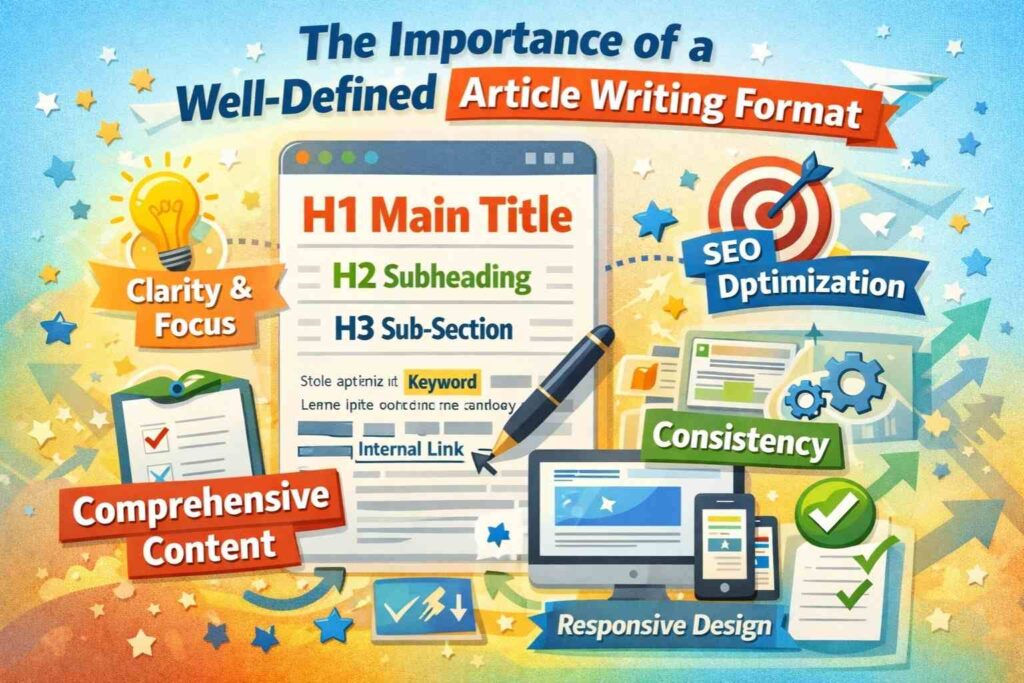
Proper heading usage not only organizes your article but also improves your content’s readability and SEO. Make use of H1, H2, and H3 tags to clearly differentiate between sections and subsections. This helps both readers and search engines understand the structure of your content.
- H1: Use for the article title (only one H1 per page).
- H2: For main sections, such as “Benefits of Proper Article Writing Format” or “SEO Optimization Techniques”.
- H3: For subsections that further elaborate on each point, like “Internal Linking Best Practices” or “Keyword Placement Tips”.
Tip: Ensure that your headings are not just keyword-focused but are also meaningful and provide value to your reader.
Body of the Article: Structured, Value-Driven Content
Now that you’ve set the tone and structure, the body of the article must dive deeper into your topic. This is where you provide in-depth explanations, examples, and practical advice. Avoid large blocks of text; break them up into smaller, easily digestible paragraphs to maintain the flow and keep the readers engaged.
Best Practices for Body Content:
- Keep Paragraphs Short and Concise: Each paragraph should contain 3-4 lines max, making it easy for readers to skim through the content.
- Use Bullet Points and Lists: This improves readability and ensures key points stand out.
- Keyword Placement: Use your main and semantic keywords throughout the body, but avoid keyword stuffing. Focus on natural keyword integration to maintain readability.
- Internal Linking: Link to other relevant articles or pages on your website. This boosts your site’s SEO by passing link equity to other pages and improving site navigation.
Tip: If possible, include actionable CTAs (Call-to-Actions) that encourage users to explore more content or take specific actions.
Conclusion: Summarize and Provide Actionable Insights
The conclusion of your article should not be a mere recap of the introduction. Instead, it should offer actionable insights that encourage readers to implement the knowledge they’ve gained. Your conclusion is a powerful place to reinforce the value of your content and end with a strong call to action (CTA).
SEO Tip: Include your main keyword in the conclusion while summarizing key points from the article. But ensure the language is natural and engaging.
3. Advanced SEO Techniques for Article Writing Format
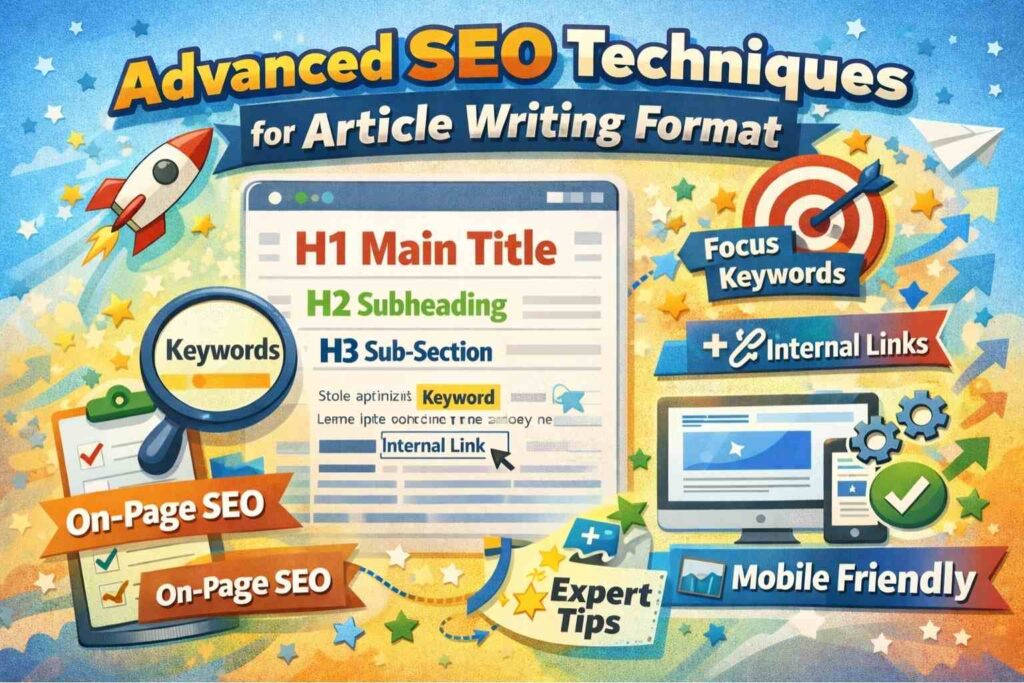
To truly maximize the potential of your article, consider the following SEO strategies that will help improve your article’s ranking:
A. Keyword Optimization
- Keyword Optimization: A Critical Element of SEO
Keyword optimization is a fundamental aspect of search engine optimization (SEO) that helps enhance the visibility and ranking of a website on search engines like Google, Bing, and Yahoo. At its core, keyword optimization involves selecting, using, and placing keywords strategically across various elements of your website content. This process ensures that search engines can easily understand and index your pages based on what users are searching for.
- Primary Keyword: Ensure the primary keyword is placed strategically, including in the title, introduction, and conclusion.
- LSI (Latent Semantic Indexing) Keywords: These are keywords related to your primary keyword, which help search engines understand the context. For example, for “article writing format,” related terms might include “writing structure,” “SEO content writing,” “content formatting tips,” etc.
- Understanding Keyword Selection
The first step in effective keyword optimization is keyword selection. It’s essential to choose the right keywords that are relevant to your content, products, or services. Tools like Google Keyword Planner, Ahrefs, and SEMrush can help identify keywords with high search volume and low competition. Understanding user intent is also crucial—whether users are looking for information (informational intent), a product (transactional intent), or a solution (navigational intent)—will guide you in choosing keywords that align with your audience’s needs.
- Strategic Placement of Keywords
Once you’ve selected your target keywords, it’s time to place them strategically throughout your website. The goal is to ensure the keywords are incorporated naturally into various elements, such as:
- Title Tags: Including keywords in your title tag helps both users and search engines understand the topic of your page. It’s one of the most important SEO ranking factors.
- Meta Descriptions: Although meta descriptions don’t directly impact rankings, they influence the click-through rate (CTR) of your website. A well-crafted description with relevant keywords can attract more visitors.
- Headings and Subheadings: Using keywords in headings (H1, H2, H3) not only enhances content readability but also signals to search engines what your page is about.
- Body Content: The body text is where most of your keyword optimization takes place. However, it’s essential to avoid keyword stuffing—using keywords excessively in a way that disrupts the flow of the text. Instead, focus on creating high-quality, informative content that naturally incorporates keywords.
- Alt Text for Images: Since search engines can’t “see” images, they rely on alt text to understand the context. Including relevant keywords in alt attributes can help improve image search rankings.
- URLs: A keyword-rich URL is beneficial both for SEO and user experience. Clear, descriptive URLs with target keywords improve the likelihood of ranking well on search engines.
- Maintaining Keyword Density and Avoiding Keyword Stuffing
In article writing format while keywords are important, overusing them can lead to keyword stuffing—a practice that Google and other search engines frown upon. This can result in penalties or lowered rankings. Aim for a natural keyword density, ensuring your content reads well while including relevant terms.
B. Featured Snippet Optimization
Structure parts of your article to answer questions directly. This can help you land in Google’s featured snippet (the boxed section at the top of search results). Use bullet points, numbered lists, and clear definitions to improve your chances.
C. Mobile Optimization
article writing format With mobile-first indexing becoming a priority for Google, ensure your article is responsive and mobile-friendly. This includes optimizing your images, keeping page load times fast, and ensuring easy navigation on mobile devices.
4. Common Mistakes in Article Writing Format and How to Avoid Them
1. Poor Keyword Placement
Using keywords incorrectly, or stuffing them unnaturally, can negatively impact your rankings. Always place keywords where they fit contextually, and use synonyms and related terms to maintain a natural flow.
2. Neglecting Mobile Optimization
Ignoring mobile-friendliness can significantly harm your SEO rankings. Given the increasing number of mobile users, ensure your website and articles are mobile-optimized.
3. Ignoring Internal Linking
Internal links are crucial for SEO (article writing format), yet many writers overlook this. Ensure you’re linking to other relevant articles or pages within your website to boost overall site authority.
5. FAQs – Article Writing Format
Q1: What are the key components of a perfect article writing format?
Q2: How do I structure a long-form article?
Conclusion: Master Your Article Writing Format for SEO Success
The right article writing format is the foundation for creating high-ranking, engaging, and SEO-optimized content. Whether you are writing for Google AdSense approval or simply looking to boost your organic traffic, following the best practices outlined in this guide will help you create structured, value-driven content. With proper formatting, keyword optimization, and user-first principles, your articles will not only rank higher but also keep readers coming back for more.
Start implementing these tips today and watch your content climb the ranks, drive organic traffic, and achieve your SEO goals.
Also Read:-
What Is Search Engine Positioning SEO? (Concept Explained Clearly)Organic growth in 2026
Multisite for SEO: Complete Guide (Hindi + English) for Scalable Website Growth in 2026
SEO क्या है ? Complete Beginner to Advanced Guide For Powerful SEO in Hindi for 2026